
Fort Smith, AR · Garage Door Service
When a Spring Goes in Cold Weather
Why garage door springs in Fort Smith fail when temps drop, how 1980s-90s construction plays into it, and what to check before the next cold snap.
- Repairs & new doors
- Springs & openers
- Serving 5 nearby communities
What Is Going On
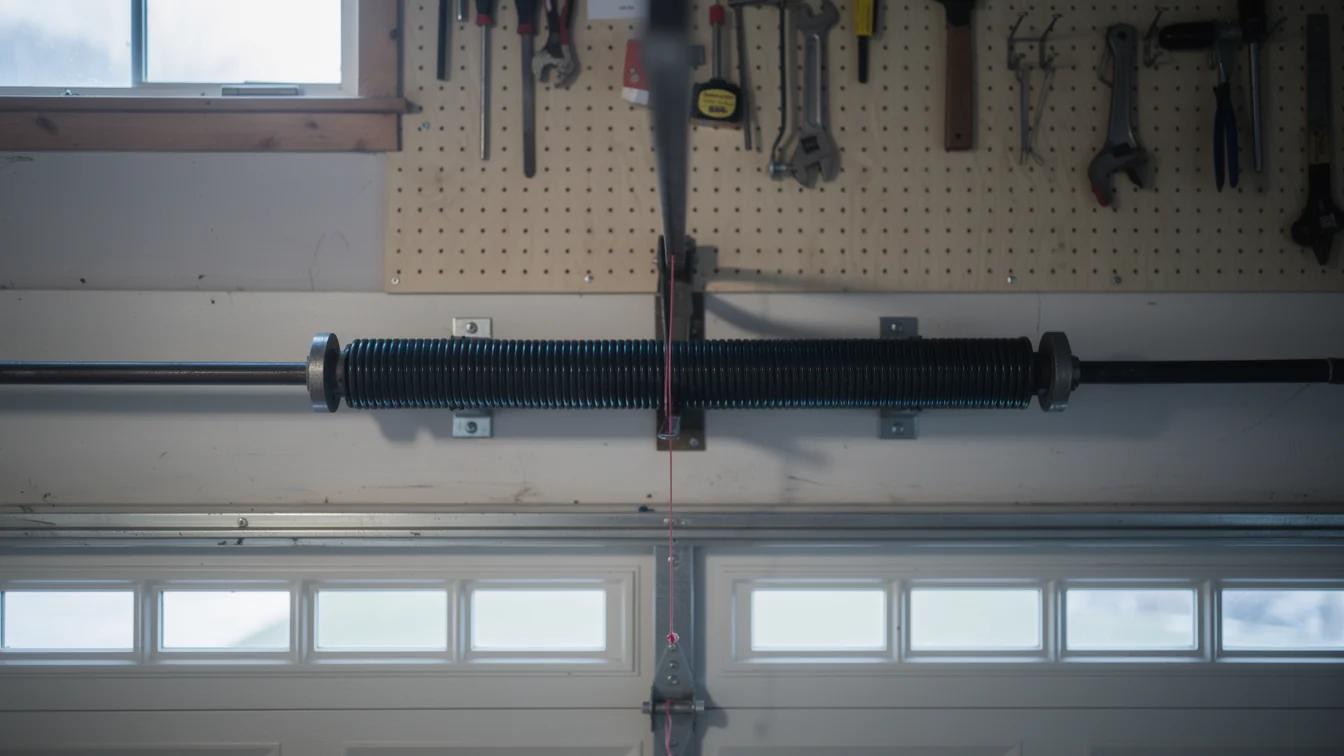
A torsion spring is steel wound tight enough to lift a door that weighs more than most people guess. Steel contracts as it gets cold, and that contraction adds stress to metal that's already fatigued from years of cycling up and down. Most houses in this service area were built between 1975 and 1996, with the median landing around 1987. That means a lot of the original springs, if they were never swapped, are pushing past the end of their rated cycle life right about the time a cold snap hits. It's not that cold weather breaks a healthy spring. It's that cold weather is the final push on a spring that was already close to done. The crack usually happens first thing in the morning, when the door hasn't moved in eight or ten hours and the metal is at its stiffest. You hear a bang from the garage, and the door won't budge, or it comes down hard and uneven.
Where People Go Wrong
The most common mistake is assuming the opener is broken when the spring is actually what quit. The motor runs, the light comes on, but the door won't lift, because the opener was never built to lift a garage door on its own; it's the spring doing most of the work. Pulling the emergency release and trying to force the door up by hand on a broken torsion spring is the second mistake, and it's the one that gets fingers caught in track or cable. Across the ten communities this crew works in - Barling, Van Buren, Kibler, Greenwood, Lavaca, Hackett, Alma, Cedarville, Charleston, and Mulberry - the houses share the same 1980s-90s build era, so the springs aging out right now aren't limited to one neighborhood. If your house falls in that window and nobody's touched the spring since the door went in, that's the thing to check before winter, not after it snaps.
What Changes With the Season
Spring tension doesn't change with the weather, but the steel's resistance to flexing does. In a cold snap, a spring that was already near the end of its rated cycles - often the case in houses built in that 1975-1996 window - has less give left in it, and that's when it lets go instead of just getting stiff. Summer heat does the opposite: it makes the metal more pliable, which is why a marginal spring can limp through August and then fail in January. That's also why a spring job booked in the fall, before the cold sets in, beats one booked as an emergency repair after the door is already stuck shut. One honest limitation: a spring swap doesn't fix a door that's also got worn rollers or a bent track. If those are part of the problem, replacing the spring alone just buys you a little time before something else on the same door gives out.
What the Weather Here Does to It
This area sits in a cold-moderate climate band, which means real winter cold but not the extreme sustained freezes you'd get further north. That's actually the worst combination for an aging spring: enough cold to stress contracted steel on the worst mornings, but not steady enough cold to make an owner think about winterizing the garage at all. A door that's fine for weeks can fail the one morning it drops hard overnight. With roughly 11,546 owner-occupied houses across this area sitting in that same build era, a lot of springs are reaching the same age at roughly the same time, which is why late-year spring calls tend to cluster here rather than spread evenly across the calendar.
Frequently asked questions
Why did my garage door spring break on a cold morning?
Steel contracts in the cold, and that adds stress to a spring that's already fatigued from years of lifting the door. If the spring was original to a house built in the 1975-1996 window common across this area, it was likely near the end of its life anyway. Cold weather just happens to be when the last bit of give runs out.
Is it safe to open the door by hand if the spring breaks?
Not recommended. Without the spring doing its share of the lifting, the door is heavier than it looks, and forcing it up by hand risks the cable snapping or the door dropping on its track. Leave it closed and get the spring replaced before using the door again.
Does the opener need replacing too if the spring breaks?
Usually not. The opener motor isn't built to lift the door's full weight on its own; the spring does that work. A broken spring can look like a dead opener because the door won't move, but once the spring is replaced the existing opener typically works fine.
Should I replace both springs if only one breaks on my double door?
Worth asking about when you call. Springs installed at the same time wear at close to the same rate, so if one lets go, the other is often not far behind, especially on a door that's been through a full cold-weather cycle.
Related garage door services in Fort Smith
More garage door guides
Book garage door service in Fort Smith
Call now or request a quote - tell us what the door is doing and where you are.