
Fort Smith, AR · Garage Door Service
Keeping an Original 1980s Door Running Through a Fort Smith Winter
Most Fort Smith houses went up between 1975 and 1996, before stricter insulation codes. See what that means for your garage door through a cold winter.
- Repairs & new doors
- Springs & openers
- Serving 5 nearby communities
What Is Going On
Walk the service area from Barling out to Mulberry and you're mostly looking at the same build window: 1975 to 1996, with the median house going up around 1987. That's not a coincidence of ten separate towns growing the same way by accident - it's one long stretch of regional growth, and it means the garage door hardware out there is older than most people think. A door installed when a house was built in 1987 is pushing forty years on its springs, its hinges, and in a lot of cases its original opener. Across the ten communities we cover - Barling, Van Buren, Kibler, Greenwood, Lavaca, Hackett, Alma, Cedarville, Charleston, Mulberry - the story repeats: 1980s and 90s stock, original hardware, and owners who've never had a reason to think about the door until it stops working. That's the baseline. Everything else on this page is about what happens to that specific hardware, in this specific climate, as it ages past its original spec.
Where People Go Wrong
The most common mistake is treating a garage door like it's maintenance-free because it hasn't failed yet. On a house built in the 1987 range, the springs doing the lifting were never designed to last the life of the house - they were designed for a cycle count, and that count doesn't reset. Owners replace the opener when it dies and leave the original springs and track hardware alone because they still look fine. They don't look fine from the inside. The second mistake is calling about a noisy door only after it won't open at all, which usually means a part failed under load instead of being caught worn. With houses this age, the rollers and hinges are frequently the original stamped-steel pieces from the build, not the sealed-bearing replacements sold today, and they wear quieter than people expect right up until they don't. We don't replace parts that aren't worn just to sell a job - plenty of original hardware from the 1980s and 90s is still fine, and telling an owner otherwise would be the wrong call. But on a door this old, somebody should actually look at the spring and the track before it fails on a cold morning, not after.
What Changes With the Season
This area sits in a cold-moderate band, which means real winter cold, not the kind that stays mild year-round. Steel contracts in the cold, and a torsion spring that's already near the end of its rated cycle count loses tension faster in winter than in summer - the same spring that limped through August can snap in January. Tracks that are slightly out of alignment in warm weather can bind hard once the metal tightens up. For houses built across this 1975-1996 window, where the hardware is original or close to it, the seasonal swing is the thing that turns a minor issue into a dead door. It's also worth saying plainly: not every noise or stiff spot means a part is failing. Some of it is just cold steel doing what cold steel does, and it loosens up again once temperatures come back up. The difference matters, and it's usually obvious once someone's hands are actually on the spring and track rather than guessing from how the door sounds.
What the Weather Here Does to It
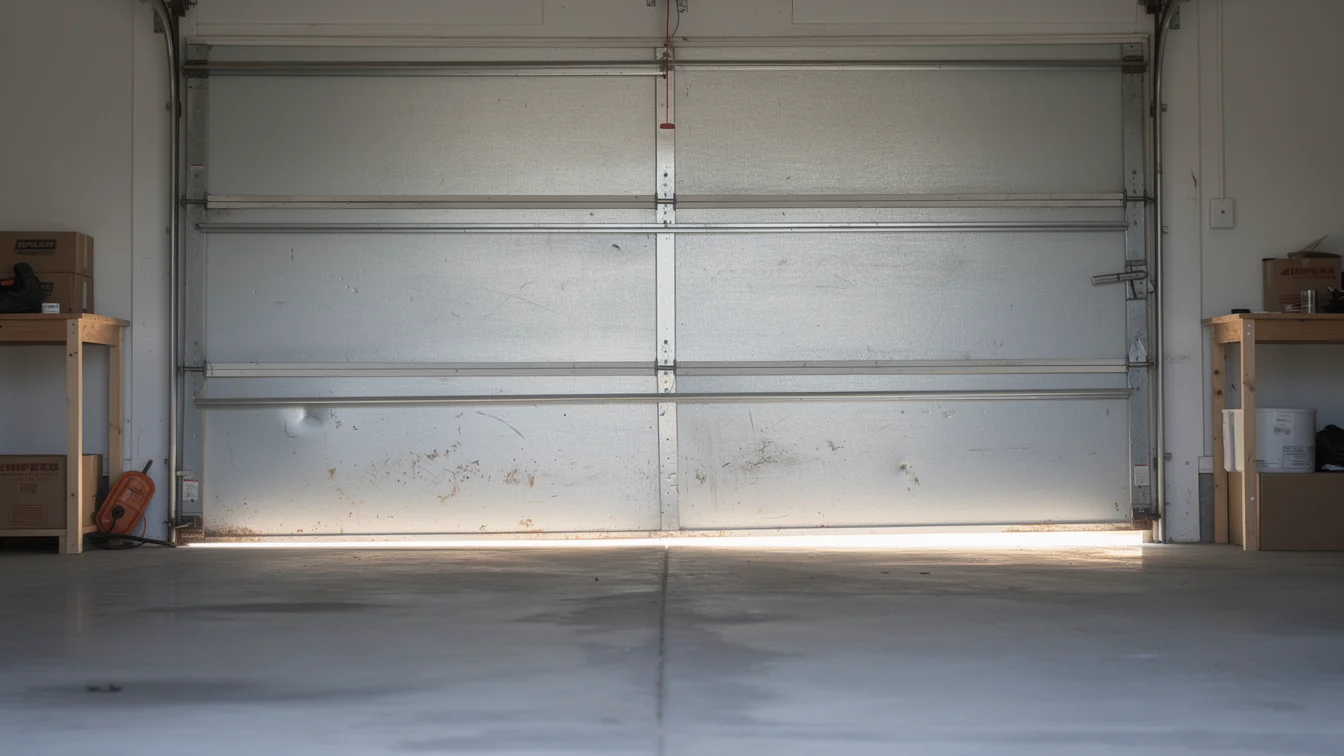
Houses from this build era weren't put up to a code that required garage doors to be insulated or sealed the way newer construction is, so a lot of the original doors in this service area are single-layer steel with minimal weatherstripping. In a cold-moderate climate, that uninsulated steel is the first thing to show condensation on a cold morning, and condensation on hardware over enough winters is what starts the rust that eats a spring from the inside before it ever looks bad from the outside. It's a slow process tied directly to the kind of winter this area gets and the kind of door this era of house came with - not a problem specific to any one bad batch of hardware, just physics acting on an old, uninsulated door through another cold season. Replacing the door with an insulated panel solves the condensation side of it. Replacing just the weatherstripping is a smaller fix that helps but won't stop a spring that's already corroding from an uninsulated run of winters before you noticed.
Frequently asked questions
Is my garage door too old to keep repairing instead of replacing?
Depends on what's wrong. A worn spring or a bent roller on a door from this 1975-1996 era is usually worth fixing. If the panel itself is rusted through or the track is warped from years of an unsealed, uninsulated door taking condensation, replacement usually makes more sense than chasing repairs on it.
Why does my door act up specifically in winter?
Steel contracts in the cold, and springs lose tension faster once temperatures drop. If your house is from the 1980s or 90s build era common across this area, the hardware is already aging, and a cold-moderate winter is exactly the kind of stress that turns a slightly worn spring into one that snaps.
Do I need to insulate my garage door?
Houses built in this area's main construction window weren't required to have insulated garage doors, so a lot of original doors are single-layer steel. In a cold-moderate climate that means more condensation on the hardware over time, which speeds up rust on springs and tracks.
Related garage door services in Fort Smith
More garage door guides
Book garage door service in Fort Smith
Call now or request a quote - tell us what the door is doing and where you are.