
Fort Smith, AR · Garage Door Service
Is Your Fort Smith Garage Door Worth Fixing, or Done
Most Fort Smith houses went up between 1975 and 1996. Here's how that age and our winters decide whether your door is worth repairing or replacing.
- Repairs & new doors
- Springs & openers
- Serving 5 nearby communities
What Is Going On
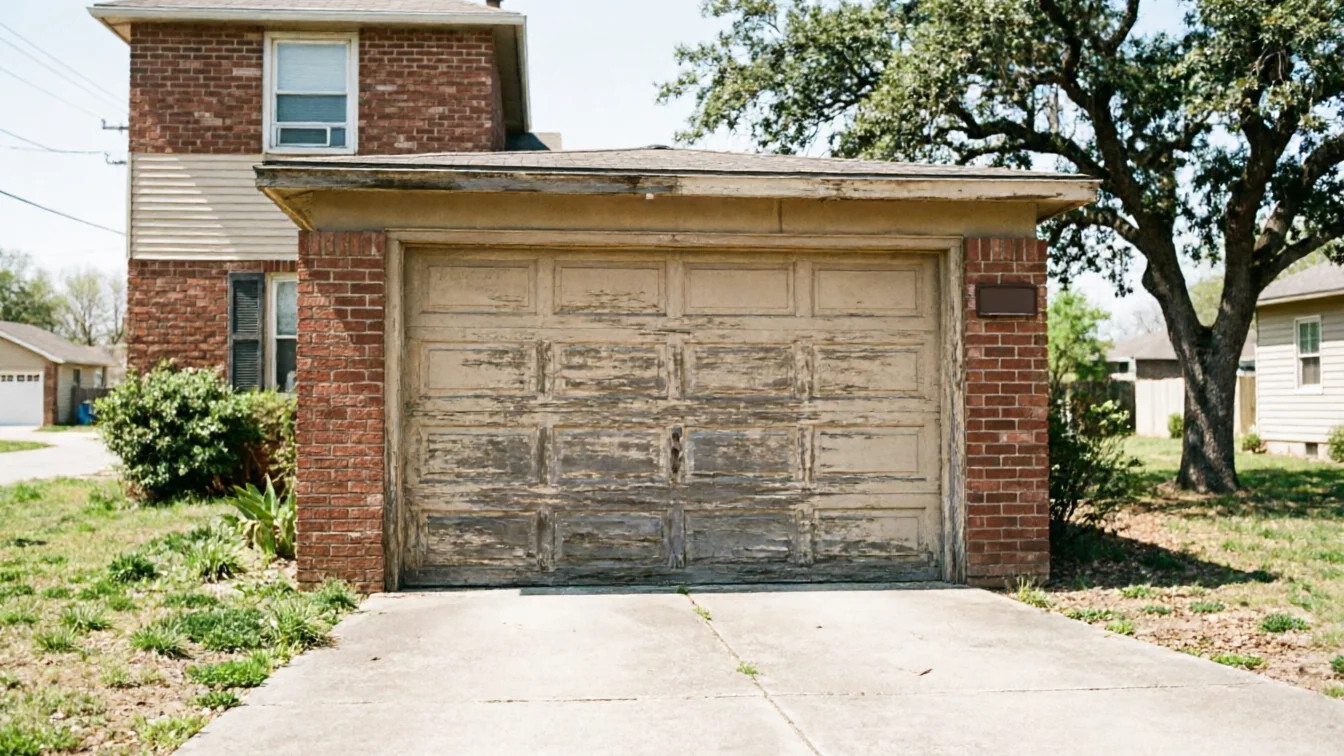
Across Fort Smith and the ten surrounding areas we work - Barling, Van Buren, Kibler, Greenwood, Lavaca, Hackett, Alma, Cedarville, Charleston, and Mulberry - most garage doors on the road right now were installed when the house was built, and most of those houses went up between 1975 and 1996, with the median landing around 1987. That means a huge share of the doors we get called on are somewhere between 28 and 48 years old. A steel door from that era can still run fine if the track and hardware were kept in alignment, but the springs, the rollers, and especially the opener almost never are original anymore - they've been swapped once already, sometimes badly. The question we get asked on every other call isn't "can you fix this," it's "should I." The honest answer depends less on the brand of door and more on what decade it's from and what's actually worn versus what's just loud.
Where People Go Wrong
The mistake we see most is treating a door built in the 1980s like it's the same animal as one built in 2015. It isn't. Doors from the 1975-1996 run were mostly built with thinner steel skins and simpler torsion setups, no insulation in a lot of cases, and hardware sized for a lighter-duty opener than what's bolted to the header now. Homeowners replace the opener, get a stronger motor, and never upsize the spring to match - so the door labors, the cables stretch, and six months later they're calling about a cable that snapped off a drum it was never matched to. The other common error is patching a worn door panel on a house that's pushing 40 years old and calling it done, when the real problem is a track that's racked out of square from decades of settling. Fort Smith's median household income sits around $58,870, and we get that budget matters - but a $90 panel patch on a door whose track geometry is off just moves the failure a few months down the road.
What Changes With the Season
Fort Smith sits in a cold-moderate climate band, which means the door does real work twice a year - not constant extreme cold, but enough freeze-thaw cycling that metal fatigue shows up earlier than it would somewhere milder. On a door that's already 30-plus years old, that cycling is what finally cracks a weld or snaps a spring that's been overdue for years. We see a jump in spring failures in late fall and again in late winter, right when the temperature swings are sharpest and the steel has the least give left in it. On a newer door this is a minor stress. On a door from the 1980s or early 90s stock that makes up most of this area, it's often the event that ends the conversation about repair versus replace, because the spring that breaks is usually sized wrong for whatever opener got put on it since.
What the Weather Here Does to It
The cold-moderate swing doesn't just stress springs - it works on the seal, the bottom astragal, and any wood trim around the opening that's original to a house built before 1996. Wood swells and shrinks with the humidity and freeze cycles here, and on an older house that movement can pull the door jamb out of square by a little bit every year, which is why a 1980s door that used to close flush sometimes won't anymore. That's not a door problem, it's a house problem showing up at the door. We'll tell you straight when that's what we're looking at, because tightening hardware or replacing a panel won't fix a jamb that's moved - and we don't do structural carpentry. If the opening itself needs squaring up, that's a call for whoever handles the frame, not the door. Knowing which one you're dealing with is most of what decides whether a repair is worth doing at all.
Frequently asked questions
Is it worth fixing a garage door from the 1980s instead of replacing it?
Often yes, if the panel and track are sound and it's just hardware - springs, rollers, cables. Those wear out on any door. Where it stops being worth it is when the steel skin is rusted through or the track is racked from decades of a mismatched opener pulling on it. We'll tell you which one you've got before we quote anything.
Why did my spring snap in the same week it got cold?
Cold-moderate swings like ours put extra stress on steel that's already fatigued from age. A spring near the end of its life usually breaks during a sharp temperature change, not on a mild day. If your door is original to a house built in the 1975-1996 range, that spring has likely outlived its rated cycle count already.
My door won't close flush anymore - is that the door or the house?
On older homes in this area it's frequently the house. Wood jambs move with freeze-thaw and humidity over the decades, pulling the opening out of square. If that's what's happening, replacing the door won't fix it - the frame needs attention first, which isn't work we take on.
Related garage door services in Fort Smith
More garage door guides
Book garage door service in Fort Smith
Call now or request a quote - tell us what the door is doing and where you are.