
Fort Smith, AR · Garage Door Service
When the Power Goes Out, What Happens to Your Opener
Fort Smith's 1980s-era housing stock and cold-snap power outages put old openers at risk. Here's what actually happens to openers built before battery backup was standard.
- Repairs & new doors
- Springs & openers
- Serving 5 nearby communities
What Is Going On
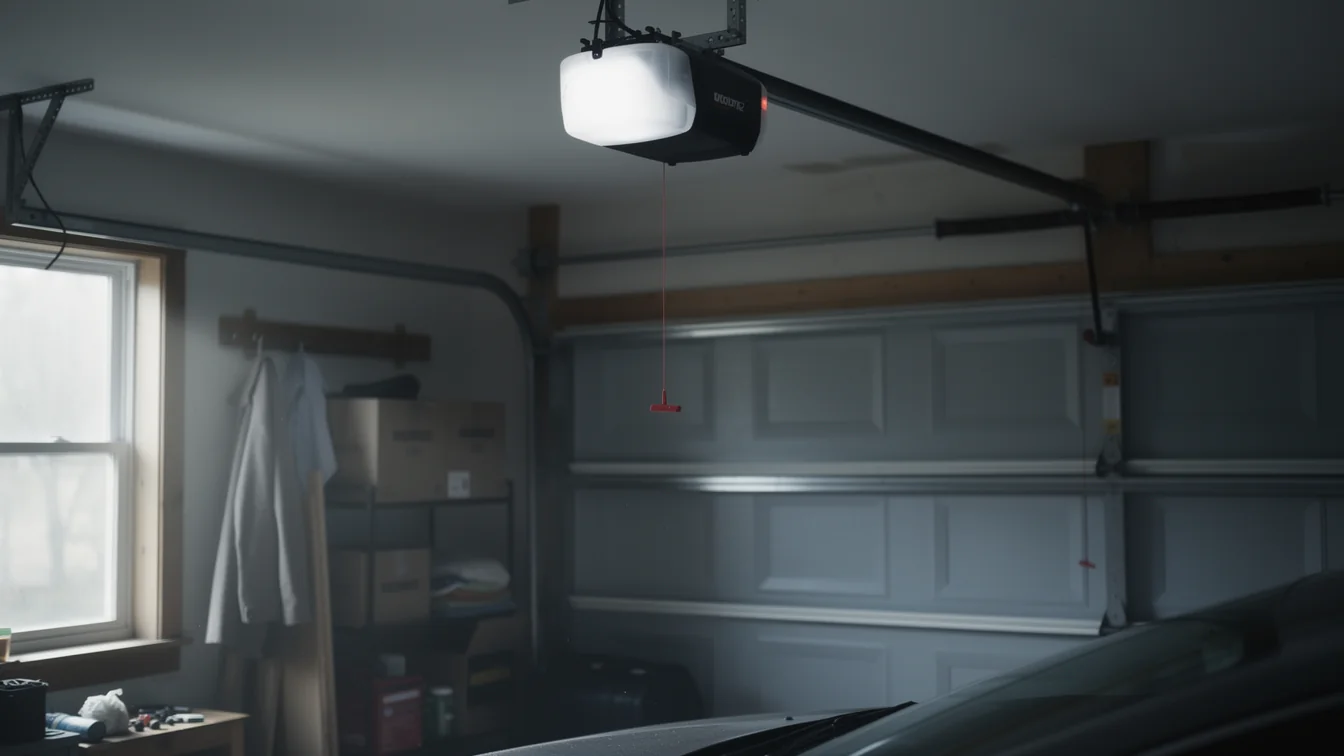
Most houses on this side of the state went up between 1975 and 1996, with the median build year sitting around 1987. That means a huge share of openers in this area are either original to the house or a straight swap-in replacement from the same era - chain-drive units built before battery backup was a standard feature. When the power outages, a 1980s or 90s opener doesn't fail safe. It just stops. No chime, no light, no slow-close. The carriage sits wherever it was in the rail when the grid dropped, and the door stays put until somebody pulls the manual release.
Across the ten communities we work in - Fort Smith out through Barling, Van Buren, Kibler, Greenwood, Lavaca, Hackett, Alma, Cedarville, Charleston, and Mulberry - the housing pattern repeats: 1980s-90s stock, garages built to the code and door sizes common at the time. That consistency is actually useful. It means the opener problems we see aren't random; they cluster around the same handful of models and the same handful of failure points, because the houses themselves are that similar in age.
Where People Go Wrong
The most common mistake is assuming a dead opener after a power outage means a dead motor. Nine times out of ten on a house from this build era, the motor's fine - the logic board lost its program, or the opener was never wired with a battery backup unit to begin with, so it just sits silent until power returns. People pop the breaker, see nothing happen, and call for a full replacement when a reprogram and a $0 fix would have done it.
The second mistake is ignoring the manual release cord until the moment you actually need it. On original or decades-old openers, that release mechanism has often never been pulled since installation. In a real outage, at night, with a car trapped inside, that's the worst time to discover the cord is seized or the trolley won't disengage. We don't carry parts for every opener model made in the 1980s - some of them are genuinely obsolete, and replacement is the honest answer there, not a repair quote that eats up a service call for nothing.
What Changes With the Season
Through the winter months, this is a cold-moderate climate - not the brutal freezes you'd get further north, but enough cold snaps and ice to strain the regional grid and knock power out for hours at a stretch. That's exactly when an opener without battery backup becomes a real problem instead of a minor annoyance: it's dark, it's cold, and the door that won't open electrically is now a door you're wrestling with manually in a driveway with ice on it.
Summer brings its own version of the same issue - storm-driven outages that hit fast and knock out power for a block or a whole subdevelopment at once. Either way, the opener itself doesn't care what season caused the outage. What matters is whether the house has a backup battery installed, and across this housing stock, a lot of them still don't.
What the Weather Here Does to It
Cold-moderate winters mean the garage itself goes through real temperature swings, and that affects more than the opener. Lubricant in an older chain-drive unit thickens in the cold, which puts extra load on the motor right when a power outage is also most likely. On a house with original hardware from the 1980s or 90s, that combination - aging motor, thick grease, no backup - is what actually produces the late-night service calls we get during a hard freeze or an ice-driven outage.
We can't promise a specific response time here, and we won't quote one we can't back. What we can say is that a battery backup unit, paired with an opener serviced for the cold rather than ignored until it fails, is the difference between a door that still opens during an outage and one that doesn't.
Frequently asked questions
Why did my opener stop working completely when the power went out?
If your opener doesn't have a battery backup unit - common on houses built in the 1980s and 90s before backups were standard - it has no power source once the grid drops. The motor isn't broken; it simply has nothing to run on until electricity returns or a backup battery is installed.
Can I still open my garage door during a power outage?
Yes, every opener has a manual release cord that disconnects the trolley from the chain or belt, letting you lift the door by hand. It's worth testing yours before you need it in the dark during a winter outage, since release mechanisms on older units can stick from lack of use.
Is it worth adding a battery backup to an old opener?
Usually yes, if the opener is otherwise in good shape. Given how often cold-season outages hit this area, a backup battery means the door still opens on command instead of going fully manual. We don't recommend it on units so old that parts are no longer available - in that case, replacement makes more sense.
Related garage door services in Fort Smith
More garage door guides
Book garage door service in Fort Smith
Call now or request a quote - tell us what the door is doing and where you are.